# 1. Introduction

#### SCG: An Expanded Web3 Sports Social Game Ecosystem Built on NFT Chains

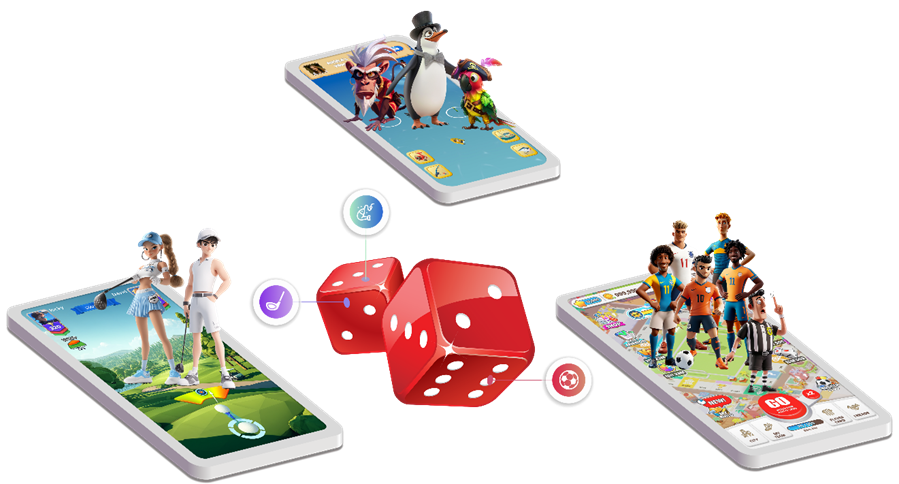
SCG (Social Community Game) is a Web3 sports game platform built on the innovative concept of an NFT-Chain, aiming to establish a new ecosystem where digital assets and gameplay are seamlessly integrated. It incorporates various sports-themed games—including soccer, fishing, golf, basketball, and baseball—combined with a decentralized community structure.

<figure><img src="https://2619494232-files.gitbook.io/~/files/v0/b/gitbook-x-prod.appspot.com/o/spaces%2FiMXObDDzIoKcNtZbbiTX%2Fuploads%2FSvR6TRAMkRR9B4uzBQtu%2Fimage.png?alt=media&amp;token=329d4aaa-9fe0-4f4f-bc0d-bed45f8730ab" alt=""><figcaption></figcaption></figure>

SCG goes beyond simple gameplay enjoyment by enabling each sports game to operate independently while also interacting within a unified NFT asset structure and governance system. This allows players to record, develop, and utilize their achievements and assets in each sport as NFTs, with individual NFTs functioning as cross-game assets throughout the ecosystem.\
The core infrastructure, the NFT-Chain, evolves the concept of NFTs from mere records of ownership, as seen in traditional Web3 games, into dynamic entities that serve as agents of player activity, scalable assets, and instruments of governance. Within this system, NFTs function not just as collectibles, but as Digital Actors that participate in matches, undergo upgrades, manage leagues, and exercise governance rights.\
The SCG ecosystem is centered around two types of NFTs: Genesis NFTs and Generated NFTs. Genesis NFTs are unique, initially issued assets that serve as core components for governance and upgrades. In contrast, Generated NFTs are created directly by players through the collection and combination of in-game fragments. This structure reflects NFTs as accumulations of player experience, performance, and strategy—not short-term scarcity assets, but long-term utilities with inherent value.\
Economic sustainability is one of the core values of the SCG ecosystem. The SCG governance token serves as a vital resource for policy-making, league management, and NFT enhancements. Players participate in ecosystem operations through a DAO model. Meanwhile, the in-game currency is designed as a restricted utility token used exclusively for internal economic activities, such as obtaining and upgrading NFTs or joining leagues. This approach prevents external leakage and effectively controls in-game inflation, reinforcing the stability of the NFT-centric economic model and enhancing a player-driven asset circulation structure.\
Furthermore, SCG is designed to empower players to become co-architects of the digital ecosystem, rather than passive users, through NFT-based governance. Holders of the SCG governance token can participate in key decisions such as NFT issuance, league policies, and reward models via DAO, thereby establishing a new game structure that enables economic and social empowerment for players beyond simple revenue sharing.\
The long-term vision of SCG is to build a globally connected network of sports games based on the NFT-Chain, expanding into a digital economic structure that transcends individual projects. NFTs serve as shared assets and engagement records that link different sports genres, dismantling the boundaries between games and forming a digitally interconnected meta-ecosystem.\
SCG will continue to evolve through regular content updates and NFT-based economic activities. It offers a structure where players can generate tangible value, integrating robust social community features and competitive systems to create a unified Web3 sports ecosystem that fosters participation, cooperation, and competition.


# 2. SCG Ecosystem and Governance

The SCG (Social Community Game) blockchain ecosystem is a Web3-based sports gaming network built around the concept of the NFT-Chain. This ecosystem is structured to integrate various sports game titles, allowing players to participate not only as asset holders but also as active contributors to the ecosystem's governance and operations.

<figure><img src="https://2619494232-files.gitbook.io/~/files/v0/b/gitbook-x-prod.appspot.com/o/spaces%2FiMXObDDzIoKcNtZbbiTX%2Fuploads%2FN7rspPAzjgm58nfikOdO%2F%EC%BD%94%EC%9D%B8%EB%A1%9C%EA%B3%A07.png?alt=media&amp;token=63b27a9e-8570-4fdd-9af6-9776328b2a34" alt="" width="375"><figcaption></figcaption></figure>

SCG is developed on the Solana mainnet, which offers the advantages of high transaction speed and low fees. By merging gameplay with blockchain technology, SCG ensures both real-time responsiveness and transparency. Most notably, the NFT-Chain integrates player asset ownership, utility, economic activity, and governance participation into a seamless, unified flow—enabling a player-centric, decentralized sports game ecosystem.

1. Hybrid On-Chain/Off-Chain Architecture and Asset Ownership Protection\
   The SCG ecosystem utilizes a Mirror NFT Engine that processes real-time gameplay data (such as matches, training, and upgrades) off-chain for performance, while on-chain ledgers securely store changes in NFT state and ownership. This hybrid model achieves a balance between scalability and reliability, with all NFT creation, combination, enhancement, and burning processes executed automatically via smart contracts without operator intervention.\
   \
   Players have full autonomy over their NFT assets, which they can transfer or trade externally. All ownership and activity histories are permanently recorded on the blockchain, ensuring secure, verifiable provenance.

2. NFT-Centric Economic Structure   \
   In SCG, NFTs are defined not as mere game items, but as digital assets encapsulating player strategy, performance, and economic activity.

* Genesis NFTs are limited-edition assets issued at project launch. They serve premium functions such as enhancement, combination, and league management.
* Generated NFTs are created by players through collecting in-game fragments, reinforcing the link between participation and rewards.\
  \
  NFTs can be used in various ways—upgrading via game currency, joining leagues, or engaging in strategic exchanges—automated by smart contracts to ensure trust and efficiency.

3. Halving Model and Economic Balance   \
   To maintain long-term value, the NFT-Chain implements a halving issuance model and a combination-based upgrade system. Over time, the issuance of new NFTs gradually decreases, enhancing the scarcity and strategic value of existing assets. Excess NFTs are either burned or fused into higher-tier NFTs, optimizing the overall supply.

4. Intrinsic Circulation of In-Game Currency.\
   The in-game currency in SCG is a closed-loop resource used exclusively for internal gameplay—such as distributing rewards, purchasing items, and paying league entry fees. It is not tradable on external markets. This system ensures that asset demand is driven solely by player activity. The currency is continuously consumed through upgrades and reward systems, playing a vital role in the ecosystem's economic cycle.

5. DAO-Based Governance Participation Structure   \
   SCG adopts an NFT-based governance system that allows players to directly influence economic policies and system operations. Through the DAO structure, NFT holders can submit proposals and vote on critical matters such as league operations, NFT issuance, and reward structures. This enables a community-driven model that prevents unilateral decision-making by the developers.   \
   SCG governance is evolving into an activity-weighted DAO model, where not only token holdings but also gameplay records and NFT utilization history contribute to voting power—ensuring a more equitable and realistic distribution of governance rights.

6. Interconnected Economy Across Games   \
   The NFT-Chain is designed to support cross-game asset interoperability within the ecosystem. For example, a stadium NFT acquired in SoccerGO can also serve as a supportive asset in the golf or fishing game. By differentiating game functions while enabling interoperability, the utility of assets is greatly extended.   \
   Players can continuously leverage a single NFT asset across multiple games, creating natural economic linkages between them and enhancing long-term engagement.

7. A Sustainable Web3 Economic Framework   \
   SCG seeks to realize the core values of the Web3 era—player-owned economies, asset sovereignty, and community-based operation—through its NFT-Chain. All economic activity in the ecosystem is automated and verifiable via smart contracts and on-chain ledgers. Player participation is directly linked to ecosystem growth, forming a sustainable feedback loop.   \
   SCG is not just another Web3 game; it represents a networked game economy connected by NFTs, setting a new standard for global sports-focused digital ecosystems.


# 3. Game System

The game system of SCG (Social Community Game) follows the universal play logic based on Web3, designed by combining various sports based on the Monopoly board game mechanism. Different sports such as soccer, fishing, and golf are integrated on a common game system, and players can compete and cooperate in each sport through various strategies and asset utilization, and create economic performance.

<figure><img src="https://2619494232-files.gitbook.io/~/files/v0/b/gitbook-x-prod.appspot.com/o/spaces%2FiMXObDDzIoKcNtZbbiTX%2Fuploads%2FU62l0Yjuzh6XWR9PBQ1U%2Fimage.png?alt=media&amp;token=c4c38cd0-ea69-4a21-a868-550f6f6a647d" alt=""><figcaption></figcaption></figure>


# 3.1 Core Gameplay Logic (Universal Sports Play)

1. Combination of Monopoly-Style Board Game and Sports Match Systems   \
   The sports games within SCG are structured based on an asynchronous matching system, minimizing direct control and intervention by the player. Instead, players influence match outcomes by organizing clubs or teams and establishing strategies. For instance, in soccer, there is a shooting challenge; in golf, game matching is based on match records; in fishing, sport-specific match modes such as catch competitions are provided.   \
   When a player reaches a specific event tile on the board—such as a stadium, golf course, or fishing spot—a corresponding sports match is automatically triggered. The outcome is determined based on team stats, stadium conditions, and the opposing player’s data. Upon winning, players receive various rewards including NFT fragments, in-game currency, and match bonuses. Bonus rewards accumulate with consecutive wins.<br>
2. Strategic and Interactive Board Game System   \
   SCG’s board game system follows the basic mechanism of rolling dice and moving, while incorporating various events and economic activities on each tile. Depending on their movement strategy, players can secure assets and establish competitive relationships with other players.<br>

<figure><img src="https://2619494232-files.gitbook.io/~/files/v0/b/gitbook-x-prod.appspot.com/o/spaces%2FiMXObDDzIoKcNtZbbiTX%2Fuploads%2Fco3YOLgHtmeC2q0Gsidi%2Fimage.png?alt=media&amp;token=fc73e560-cdcc-47a2-ad5f-7af09f0fee35" alt=""><figcaption></figcaption></figure>

Representative board tile events include:

* Banks, stores, and economic facilities: Generate continuous income
* Hotels and resorts: Provide fixed income and bonuses
* Stadiums and match facilities: Automatically trigger matches and offer extra rewards
* Penalty zones: Impose movement restrictions, currency loss, or act as strategic hindrances

These board game elements are maintained uniformly across different sports categories, enabling various sports games to operate smoothly within a single integrated interface.

3. Overview of Key System Elements <br>

* Monopoly-style board game system: Players roll dice and move across dedicated boards for each sports game. They engage in activities such as acquiring assets, participating in matches, and triggering bonus events.
* Sports match system: Matches are triggered automatically when landing on certain tiles, and proceed via stat-based asynchronous simulation. Players can strategically influence match outcomes based on their player NFTs, club management, and enhancement levels.
* Card collection system: Players collect NFT player fragments specific to each sport and combine them to form complete player cards. These cards are core tools for team building and enhancement. Collecting rare cards grants additional rewards.
* Club and league operation system: Players who own a certain number of player cards can form a club. Upon meeting certain conditions, they acquire the right to operate a league. The league operation right exists as an NFT, and it can be transferred to others or used to receive rewards.
* Mission and leaderboard system: Daily and weekly missions, along with the overall leaderboard, promote continuous participation. Top-ranked players are rewarded with NFTs, in-game currency, and limited items.
* City and club development system (My City system): Players can grow their clubs by upgrading their city or sports facilities and establish long-term revenue bases through infrastructure investments. This system allows for strategic asset allocation and sustainable economic operation.
* Community and social system: Features such as friend invitations, social linking, and item exchange are supported to expand collaborative and competitive interaction. Active social participation is reflected in the reward structure, providing additional benefits.
* Reward system: Rewards are granted based on various player activities such as dice movement, match participation, league operation, city development, and social interaction. These rewards include NFT fragments, in-game currency, league operation rights, and enhancement materials, all of which are core means for economic activity and asset growth.

SCG’s game system is organically integrated with a Web3-based economic model, NFT-chain structure, and hybrid on-off-chain technology, building a differentiated gaming environment that offers both strategic immersion and economic achievement for players.


# 3.2 Genesis NFT and Generated NFT

The NFT asset structure of the SCG ecosystem is centered around Genesis NFTs and Generated NFTs. Through the transparent and reliable economic mechanism of the NFT-Chain, these two types of NFTs serve as the core for in-game asset value creation and economic activity. Each plays a complementary role through its own functional purpose and method of creation, laying the foundation for long-term game expansion and a sustainable economic system.

#### 1. Genesis NFT

Genesis NFTs are fixed-supply, limited-edition assets issued at the initial phase of the SCG project. These are permanently recorded on the NFT-Chain to guarantee scarcity and are transparently managed. Genesis NFTs are mounted onto Generated NFTs to maximize their strategic and economic performance, and they serve as key assets in major economic activities within the game.

<figure><img src="https://2619494232-files.gitbook.io/~/files/v0/b/gitbook-x-prod.appspot.com/o/spaces%2FiMXObDDzIoKcNtZbbiTX%2Fuploads%2Fjds04ghgWnHR94AnujDX%2Fimage.png?alt=media&amp;token=4495a7fb-f382-450b-8d10-c68041b5431b" alt=""><figcaption></figcaption></figure>

**Key Features of Genesis NFT**

* Scarcity and fixed issuance: Issuance volume is limited via the NFT-Chain, which ensures long-term value retention.
* Enhancement function: When mounted onto Generated NFTs, the enhancement is recorded on the NFT-Chain, improving performance and economic utility.
* Strategic functionality: Genesis NFTs grant various privileges such as priority in match rewards, benefits for league participation, and voting rights in the DAO, thereby guiding players' strategic choices.

#### **2. Generated NFT**

Generated NFTs are dynamic assets that can be acquired through player activities within the game and on the NFT-Chain. These NFTs evolve progressively based on continued player participation and strategic asset management, with all changes and upgrades transparently recorded on the NFT-Chain.

<figure><img src="https://2619494232-files.gitbook.io/~/files/v0/b/gitbook-x-prod.appspot.com/o/spaces%2FiMXObDDzIoKcNtZbbiTX%2Fuploads%2FhmuRTeDaWpf7uLPWu5w8%2Fimage.png?alt=media&amp;token=1a66bfe4-2a07-46c8-a999-85a6d8655b3d" alt=""><figcaption></figcaption></figure>

**Key Features of Generated NFT**

* Activity-based creation: NFT fragments are provided through gameplay, mission completion, and event rewards. These fragments are combined to generate complete NFTs.
* Stage-based growth: Player NFTs can evolve into Club NFTs or League NFTs under certain conditions. Each stage of transformation and enhancement is transparently recorded on the NFT-Chain.
* Strategic asset operation: Decisions such as optimal timing for enhancement, allocation of resources, and combination methods directly impact gameplay performance and economic results.

#### 3. Interaction between Genesis NFT and Generated NFT

This NFT-Chain-based asset model maintains economic balance through the limited supply of Genesis NFTs and the ongoing creation of Generated NFTs. It enables long-term asset management and cyclical ecosystem development.

* Maintaining balance between scarcity and liquidity: The transparent management system of the NFT-Chain ensures balance between Genesis and Generated NFTs, preventing inflation.
* Participation-based asset economy: Generated NFTs, created through continued gameplay, stimulate economic circulation and encourage active player participation.
* Hybrid on/off-chain structure: All records of Genesis NFT ownership, and the strengthening, combination, and evolution of Generated NFTs are recorded on the NFT-Chain for transparency. Simultaneously, gameplay elements such as match operations and reward processing are handled off-chain to ensure real-time performance and efficiency.

The SCG ecosystem, through this NFT-Chain structure, provides an innovative and sustainable Web3 sports gaming environment where players can grow and manage their assets through their own strategic decisions and ongoing engagement.


# 3.3 Player NFT Combination and Training Enhancement System

Each sports game provides a comprehensive player development and asset management system based on NFTs, enabling players to continuously acquire and strategically improve NFTs. Players collect NFT fragments through gameplay, combine them into complete player NFTs, and further enhance them to maximize their strategic value in the game.<br>

1. **Player NFT Combination System**

<figure><img src="https://2619494232-files.gitbook.io/~/files/v0/b/gitbook-x-prod.appspot.com/o/spaces%2FiMXObDDzIoKcNtZbbiTX%2Fuploads%2FYd71WBq3ahoI8wy2GIXP%2Fimage.png?alt=media&amp;token=8229db4d-567c-45b1-971d-44b08680272f" alt=""><figcaption></figcaption></figure>

**Collection of NFT fragments and assembly into complete Player**\
Players can obtain NFT fragments through matches and event participation within the game. A certain number of fragments can be combined to create a complete player NFT. These NFTs can then be used directly in gameplay or expanded into club NFTs and league NFTs, allowing for more diverse strategic choices.

**Expansion into Club and League NFTs**\
Once players have collected a sufficient number of individual player NFTs, they can form a club NFT. When multiple club NFTs are collected, they can be further developed into a league NFT. This system provides a foundation for long-term engagement in higher levels of economic activity and strategic league management within the game.

<figure><img src="https://2619494232-files.gitbook.io/~/files/v0/b/gitbook-x-prod.appspot.com/o/spaces%2FiMXObDDzIoKcNtZbbiTX%2Fuploads%2FXbyKP7R4935F1a1sEqRY%2Fimage.png?alt=media&amp;token=04120fdd-6ac2-435f-a71f-7ecd6534311a" alt=""><figcaption></figcaption></figure>

2. **Training Enhancement System**

**Enhancement of player NFT stats**\
Player NFTs can improve their performance through training, which increases their value in matches and strategic utility. The training process involves using main player NFTs, support player NFTs, and in-game currency. During this process, support player NFTs are burned, preserving overall NFT scarcity, while the main player NFTs gain enhanced stats or acquire new abilities.

**Attribute system**\
Through training, player NFTs can develop:

* Innate Traits (natural attributes),
* Developed Traits (gained through training),
* Latent Traits (hidden potential).

Each trait is enhanced under specific training conditions, enabling player NFTs to perform distinct strategic roles during matches.

3. **NFT Scarcity Management and Economic Balance**

**Maintaining scarcity and regulating supply**\
The burning of support player NFTs during training naturally limits supply, preserving the scarcity and value of player NFTs. As training and enhancement progress, the strategic importance and market value of the NFTs increase accordingly.

**In-game economic circulation**\
The training enhancement system drives the consumption of in-game currency, stimulating active circulation within the game’s economy. The growth of player NFTs increases the demand for in-game currency, thereby supporting the balance and sustainability of the economic system.

4. **Coaching Tree System**

The Coaching Tree system, inspired by real-life relationships between coaches and players, structures the training and enhancement process for club-affiliated players. Players belonging to a club undergo training and enhancement more efficiently, while those not affiliated with a club have lower enhancement efficiency. Additionally, restrictions are applied to prevent excessive enhancement within the coaching tree, curbing NFT oversupply and maintaining long-term economic balance.\
This Player NFT Combination and Training Enhancement System supports a sustainable NFT economy within SoccerGO, allowing players to actively manage their assets and create long-term value through strategic gameplay.


# 4. Economic Model

The SCG economy is designed around a game structure based on the NFT-Chain, enabling players’ activities to become tokenized assets. The entire life cycle of NFTs—including creation, growth, trade, and burning—is managed on the blockchain. This framework supports not only rewards but also a token economy with functional value, making sustainable and practical economic activities possible through the interaction of tokens and NFTs. This section explains how the economic model and token utility structure of the SCG ecosystem promote circulation and expansion of the entire gaming economy.


# 4.1 NFT-Chain-Based Economy Model

The NFT-Chain-based economy of SCG directly reflects economic activities and user behavior in each game on the blockchain, creating a clear linkage between asset flow and gameplay. Multiple games within the SCG ecosystem—such as SoccerGO, GolfGO, BaseballGO, and Fishing\&GO—are all built on a unified NFT layer, guaranteeing interoperability and scalability of assets across different games.

<figure><img src="https://2619494232-files.gitbook.io/~/files/v0/b/gitbook-x-prod.appspot.com/o/spaces%2FiMXObDDzIoKcNtZbbiTX%2Fuploads%2F4lPhfdI8IBMwwLIEGMmz%2FSCG_Economy.png?alt=media&amp;token=8b801e92-c7b2-4c13-929d-d295ebe27520" alt=""><figcaption></figcaption></figure>

The core of the economic model lies in NFT creation and utilization, along with a fee-based revenue structure. The main revenue sources include:

* NFT marketplace fees
* Token purchase transaction fees
* In-game item sales
* Season pass and advertising revenue
* Trading commissions

Players obtain Generated NFTs through gameplay and can combine and enhance them into higher-tier NFTs. The processes of payment, trading, and burning involved in this cycle serve as the central mechanisms that drive ecosystem-wide liquidity and asset circulation.


# 4.2 Token Utility

The SCG token functions as a multi-functional utility asset for ecosystem operations, going beyond a mere medium of exchange. It is utilized across various in-game and external activities. This structure operates atop the NFT-Chain and serves as a crucial bridge between user actions and asset flows.

The following are the primary utility categories of SCG tokens:

<figure><img src="https://2619494232-files.gitbook.io/~/files/v0/b/gitbook-x-prod.appspot.com/o/spaces%2FiMXObDDzIoKcNtZbbiTX%2Fuploads%2F9ngQuP1R8LrGTv05mRm0%2Fimage.png?alt=media&amp;token=398155dc-b3f9-47a5-b77f-8f9776e90aca" alt=""><figcaption></figcaption></figure>

* Reward mechanism:\
  Used to distribute rewards based on board gameplay, match results, and event participation.
* &#x20;NFT enhancement:\
  Serves as a material for enhancing the performance of cards and digital assets.
* &#x20;NFT staking:\
  Used for obtaining staking rewards or acquiring league operation rights.
* &#x20;NFT purchase and rental:\
  Used to trade or lease Generated NFTs or Genesis NFTs.
* &#x20; Simulation-based betting:\
  Applied in sports prediction-based participatory betting systems.
* &#x20; Governance participation:\
  Used to participate in DAO policy decisions and voting on league operations.
* &#x20; Burn mechanism:\
  Idle tokens are burned to regulate the total circulating supply.

SCG tokens are also used for viewing advertisements, referral reward programs, and tournament entry purchases. Through these diverse utilities, the circulation and usage scope of SCG tokens continues to expand dynamically.


# 4.3 Content-Based Fractional Ownership Model for NFTs

The SCG ecosystem introduces a fractional ownership model for league operation rights NFTs to structure the value of content-based assets. This structure issues league—an essential operational unit within the game—as an NFT, and allows multiple participants to hold it fractionally according to specific criteria, thereby enabling structurally linked participation in operational profit flows. Fractionally owned NFTs are connected to community-based functions related to league operation for a certain period, making organic linkage between game assets and participation incentives possible.

A league operation rights NFT is issued as a single NFT, and then it can be divided into fractional NFTs or SPL-based tokens as ownership units. Holders can access operational functions and certain parts of the in-game reward system based on their share ratio, and an on-chain reward mechanism operates dynamically according to league performance and contribution level.

The high-speed processing capability and low fee structure of the Solana mainnet increase the feasibility of this fractional ownership model. In particular, the Metaplex-based NFT standard supports metadata extensibility and programmable structures, allowing complex logic to be implemented on-chain within the NFT, such as:

* league operation period settings,
* automatic burn conditions,
* function-based authority distribution.

&#x20;

Fractional ownership is issued in SPL token format, allowing for flexible configuration of liquidity and access to reward structures. This structure can be expanded into differentiated operational participation rights across leagues, function selection rights, and community proposal weighting, evolving the function of NFTs beyond simple ownership into participatory assets.

This structure focuses not on direct profit distribution from operations, but rather on priority access to in-game functions and reward systems. NFT holders receive functional benefits such as:

* priority matching rights in leagues,
* increased probability of bonus box rewards,
* higher conversion limits of in-game currency.

Through this structure, SCG aims not merely to digitize content but to transition into a user-centered decentralized operational structure. Within the NFT-Chain-based economic model, this strengthens multi-layered asset utility and functional linkage, and includes the following extended functions:

* League-based content customization:\
  NFT holders can propose game rules, stadium themes, event concepts, etc., and participate in shaping league content by linking with the community voting structure.
* Reward structure based on operational contribution:\
  A portion of the in-game currency revenue generated from league participation is redistributed based on contribution indices, and rewards consist of non-monetary in-game assets such as NFT enhancement materials, functional items, and season event participation rights.
* Secondary market distribution and value formation:\
  The fractionalized NFTs can be freely traded during the season period, and their market value is naturally reflected according to league performance, community engagement, and match demand. NFTs may expire or become deactivated depending on their validity period and functional lifespan.

&#x20;

Through this NFT fractional ownership structure, the SCG ecosystem distributes content-based functional authority to users and realizes a community-driven league operation model. This is a strategy that designs a participatory structure for behavioral assets, beyond simple digital asset trading, and represents an evolution toward a Web3 game structure where NFTs are utilized as actual game function units.

Ultimately, this model functions as a new decentralized content operation framework that combines functionality and community contribution, playing a role in expanding both the autonomy and sustainability of the ecosystem.


# 5. SCG-Based Reward System and Secondary Market Utilization

The reward system of the SCG ecosystem is structured by organically integrating in-game asset operations, DAO participation, NFT utilization, and league activities based on the NFT-Chain structure. This system goes beyond mere user participation and is designed around economic value creation and asset circulation, providing an expanded Web3-based reward network that replaces the closed asset system of traditional Web2 games.

1. **Reward Structure Based on In-Game Activities**

In SCG-based games (e.g., SoccerGO), rewards are provided based on the player's in-game activities. Main rewards consist of NFT fragments, Generated NFTs, in-game currency, and additional authority through DAO. The following reward structures are applied:

* Board game play rewards:  \
  When players move across the board by rolling dice, they can acquire NFT fragments, in-game currency, and random items according to the events of each tile.
* Match participation rewards:  \
  Based on the outcome of participating in matches for each sport—soccer, golf, fishing, etc.—players receive NFT fragments and in-game currency, with higher reward ratios for victories.
* League and tournament rewards:  \
  Participants who achieve high performance in leagues or tournaments are given enhanced NFT fragments and additional asset rewards.
* DAO participation rewards:  \
  Holders of SCG governance tokens can receive rewards based on their participation in decision-making and contributions to the community..<br>

2. **NFT and Governance Token Reward Structure**

NFTs, which players can directly generate and enhance, serve both as reward units and achievement outputs. Generated NFTs grow progressively through player activities and are rewarded in fragment form through match victories or mission achievements. The structure is as follows:

* Player/Club/League NFT rewards:  \
  Based on match results, activity history, and league contributions, players accumulate NFT fragments and combine them to evolve into higher-tier NFTs.
* Governance Token (SCG):  \
  Earned through activities such as DAO participation, contributions to league operations, and voting on economic policies, reflecting decision-making power and asset value across the SCG ecosystem.

3. **Secondary Market Trading and Economic Circulation**

The SCG ecosystem promotes trading of NFTs and tokens based on on-chain circulation, supporting the external expansion of user-based asset value.

* NFT market trading:  \
  Generated and enhanced NFTs can be freely traded in external NFT marketplaces. Their market value is differentiated based on rarity, functionality, and enhancement level.
* Token liquidity assurance:  \
  SCG governance tokens are listed on external exchanges to ensure liquidity and serve as a core resource for the reward structure and DAO operations.

4. **Inflation Control Mechanisms for Tokens and NFTs**

To establish a sustainable economic model, SCG introduces structural mechanisms that prevent inflation of NFTs and tokens. The core mechanisms are as follows:

* Burn mechanism:  \
  When combining high-level NFTs, existing NFTs are burned. Additionally, a portion of tokens used is permanently burned.
* Halving structure:  \
  The issuance rate of NFT fragments and rewards decreases over time, ensuring long-term scarcity and value.
* DAO-based issuance adjustment:  \
  NFT and token issuance volumes, reward ratios, and revenue distribution structures for league operations can be adjusted through governance decisions.

5. **Community-Centered Governance and Asset Circulation**

The SCG reward system does not stop at asset distribution but operates on a community-centered circular economy. Through DAO participation, policies such as league operations, NFT design, and match reward schemes can be adjusted by the community. This becomes a key axis in strengthening the ecosystem's autonomy and sustainability. SCG integrates the creation, use, trading, and policy decisions of assets within a single NFT-Chain structure, aiming for a model in which participation and contribution directly result in value.


# 6. RWA-Based Content Development

#### 1.  Overview

The SCG ecosystem began as a Web3 sports gaming platform based on NFT-Chain technology, integrating and operating various sports-themed social games. To date, titles such as SoccerGO, Fishing\&GO, and GolfGO have been released or are under development, and are designed to function seamlessly within a unified technical and asset framework.

To ensure the continuous expansion and diversification of its ecosystem, SCG intends to introduce the concept of Real-World Asset (RWA) tokenization. This model transforms anticipated revenue structures from game content into on-chain assets even before the game is launched, enabling community-based fundraising. Upon actual revenue generation, contributors are rewarded transparently and quantitatively via smart contracts.

Through this model, SCG seeks to move beyond simple NFT-based reward systems and establish a complete economic flow on top of Web3 technologies, connecting content planning, development, release, revenue generation, and contributor compensation.

#### 2.  Background and Objective

Traditional Web3 game projects often rely on one-time revenue models through NFT issuance or are heavily dependent on external investment to fund early-stage development. SCG aims to overcome these limitations by structuring game content itself as a long-term revenue model.

The RWA model is especially well-suited to this objective, as it allows for the pre-tokenization of various in-game revenue sources—including NFT sales, league participation fees, in-app purchases, and premium feature access. This structure enables transparent capital formation for development while providing contributors with clearly defined and predictable rewards.

Notably, this model is designed to integrate seamlessly with SCG’s core governance system, the DAO (Decentralized Autonomous Organization), ensuring transparency in decision-making, on-chain financial traceability, and quantifiable contributor incentives.

#### 3. Target Content and Scope of Assetization

All content within the SCG ecosystem is structured around NFTs and in-game currencies. As a result, it is naturally possible to define game revenue under specific rules, tokenize it via DAO-approved smart contracts, and distribute it according to quantifiable logic. The table below outlines examples of content currently planned or in operation that can be subject to assetization.

<table><thead><tr><th width="181.20001220703125">Game Title</th><th>Revenue Items Subject to Tokenization</th></tr></thead><tbody><tr><td><strong>SoccerGO</strong></td><td>NFT player card sales, stadium NFT revenue, PvP league participation fees, bonus round charges, advertising revenue from sponsorship integrations</td></tr><tr><td><strong>Fishing&#x26;GO</strong></td><td>Fishing spot NFT operation revenue, bait/equipment in-app purchases, premium tournament entry fees, real-time leaderboard rewards, limited seasonal item sales</td></tr><tr><td><strong>GolfGO</strong></td><td>Golf course NFT owner returns, equipment NFT package sales, VIP challenge league operation fees, seasonal league advertising, sponsor-linked reward product sales</td></tr></tbody></table>

Such revenue structures can be separated by season, league, or content bundle and then tokenized as RWAs. All such processes are subject to review and approval by the SCG DAO. The percentage of assetization, distribution periods, and participation criteria must follow formal DAO governance procedures.

#### 4. Structural Design and Execution Process

SCG’s RWA-based content development model operates according to the following sequence of steps:

① Project Approval and Revenue Assetization

The SCG DAO reviews proposals for new content development and evaluates the feasibility of projected revenue streams after launch. Once approved, a specific portion of anticipated revenue (e.g., 10% of seasonal gross sales or part of NFT transaction volume) is tokenized as an on-chain asset.

② RWA Token Issuance

Upon DAO approval, the defined revenue rights are issued as NFTs or SPL-based RWA Tokens. Each token includes restrictions on issuance volume, distribution rights, and conditions, bound to specific wallet addresses. These tokens function as essential assets required for participation in revenue distribution.

③ Contributor Participation and Fundraising

Genesis NFT holders and SCG token stakers are granted priority participation rights. Participants may purchase RWA Tokens directly or receive them through automatic allocation based on DAO activity and ecosystem contributions. The funds raised are allocated to content development, marketing, and operational expenses.

④ Content Development and Revenue Generation

The collected funds are used to develop game content. After launch or seasonal commencement, actual revenue is generated through NFT sales, in-game currency purchases, league operation fees, and other monetization models.

⑤ Smart Contract-Based Revenue Distribution

Upon revenue realization, smart contracts automatically aggregate proceeds and distribute them proportionally based on each participant’s RWA Token holdings. Compensation is delivered in $SCG, USDC, or other DAO-approved tokens. The entire process is transparently recorded on-chain.

#### 5. Technical and Governance Integration

The RWA system within SCG is tightly integrated with its technical and operational infrastructure as follows:

* NFT-Chain Integration: All RWA participation NFTs are linked to the SCG Mirror NFT engine, allowing real-time tracking of asset states and revenue attribution. On-chain data serves as a verifiable audit trail for all economic activity.
* DAO-Based Governance Structure: RWA project approvals, token issuance volumes, revenue distribution terms, and participation thresholds are all subject to formal voting procedures within the SCG DAO. This ensures that all key decisions are made transparently and collectively.
* Smart Contract Automation: Revenue aggregation and distribution processes are fully automated through smart contracts. Execution occurs based on predefined conditions without manual intervention, ensuring fairness and consistency.

#### 6. Expected Outcomes

The adoption of this RWA model is expected to yield the following tangible benefits for the SCG ecosystem:

* Decentralized Web3-Based Fundraising Structure: Community-driven and decentralized capital formation for game development, reducing reliance on venture capital and centralized publishers.
* Quantifiable Reward Mechanism: Rewards are issued based on transparent metrics, including contribution levels, token holdings, and DAO participation, enhancing fairness and predictability for all stakeholders.
* Functional Expansion of SCG Assets: Genesis NFTs and $SCG tokens go beyond reward tokens to serve as access credentials for RWA participation and profit sharing, increasing their intrinsic value within the ecosystem.
* Scalable and Repeatable Expansion Model: The structure is universally applicable to other SCG games—including SoccerGO, Fishing\&GO, GolfGO, and future sports titles—enabling a scalable model for ecosystem growth and financial sustainability.


# 7. Ecosystem Expansion Strategy

The SCG (Social Community Game) ecosystem is designed based on an NFT-Chain structure, aiming for the integration of assets and economic systems across multiple sports games. SoccerGO serves as the starting point and is the first example of the blockchain-based sports meta-ecosystem that SCG seeks to build. Based on this foundation, various sports-themed Web3 games are designed to be sequentially expanded. Each game maintains its own independent theme and play system, while enabling interconnected economic interactions through SCG’s shared economic structure and NFT asset framework.

&#x20;

1. **Expansion Framework into Multiple Sports Games**

&#x20;Beyond SoccerGO, which is based on football, SCG plans to sequentially expand into Web3 games centered on other sports. Each of these games shares the same NFT-Chain architecture and economic model, but is designed to have its own identity based on unique mechanisms and rule sets. The currently planned sports games for expansion include:

&#x20;

* GolfGO: A golf-themed game combining precision hitting challenges with territory control board mechanics.
* FishingGO: A fishing-themed game linking board events with a resource-based catch system.
* BaseballGO: A game combining board progression with real-time baseball simulation elements.
* BasketballGO: A basketball game focused on team strategy and coaching simulation.

&#x20;

All of these games share the SCG NFT-Chain structure, governance system, and NFT classification model. Each game has its own unique NFT collections and utilities, but certain NFT assets are designed to be interoperable across games, ensuring cross-asset utility and economic flexibility within the ecosystem.

&#x20;

2. **Cross-Game Asset and Reward Interoperability Structure**

Each game within the SCG ecosystem shares the same blockchain-based NFT infrastructure, allowing acquired assets to be used interchangeably across multiple games. This allows players to strategically manage or reuse NFTs obtained from one game in others.

* &#x20;Cross-game sharing of NFT assets:\
  For example, a stadium NFT acquired from SoccerGO can be designed to provide bonus multiplier effects or match probability adjustments in GolfGO or BaseballGO.
* Linked reward mechanisms:\
  Games within the SCG ecosystem share a unified reward structure. Rewards from match outcomes, league achievements, and event participation across games are processed under the same NFT classification system and SCG governance token framework, ensuring consistency in rewards and coherence in the economy.\ <br>

3. **Design Philosophy Based on Scalability and Economic Organicity**

The SCG ecosystem does not rely solely on the economic stability of a single project but secures ecosystem-wide resilience and scalability through organically linked multi-sports games. SCG is designed based on the following philosophy:

&#x20;

* On-chain-centric asset structure:\
  All key activities such as NFT creation, combination, burning, and trading are processed on-chain, supported by a hybrid, extensible smart contract structure.
* Scalable DAO structure:\
  Governance of leagues, seasons, and NFT policies in each game is adjusted through DAO participation, and the decisions are accumulated as common standards applicable throughout the ecosystem.
* Meta-network strategy:\
  While each game functions as independent content, they are organically connected through the SCG NFT-Chain and governance token. As a result, the entire ecosystem is structured to function as a unified Web3 sports metaverse.

Based on this multi-layered design, the SCG ecosystem functions as a sports game expansion platform based on NFTs, aiming to provide a long-term and value-oriented Web3 game environment to global users through a participant-centered decentralized economic model.


# 8. Technical Architecture

The SCG project's technical architecture consists of a hybrid on-off-chain system based on a multi-layered design with the NFT chain as its core structure. This ensures high transaction efficiency and asset traceability, while flexibly accommodating real-time gameplay requirements arising from various sports games. SCG's main goal is to simultaneously achieve a balance between blockchain security and user experience throughout the technical architecture.

1. **Hybrid On-Chain/Off-Chain Processing Architecture**

<figure><img src="https://2619494232-files.gitbook.io/~/files/v0/b/gitbook-x-prod.appspot.com/o/spaces%2FiMXObDDzIoKcNtZbbiTX%2Fuploads%2Feut1PLr4p28nfE7gKdKE%2Fimage.png?alt=media&amp;token=fa3833bb-71b9-4f0d-b155-d705be267a92" alt=""><figcaption></figcaption></figure>

The hybrid on-chain/off-chain processing architecture of SCG is designed as a technical solution to simultaneously satisfy the blockchain-level asset security and the real-time responsiveness of game services. This structure is built on the high-speed processing capability of the Solana mainnet, and by handling frequent non-core operations off-chain, the system secures both efficiency and scalability.

* Off-chain Logic Layer

Real-time board movement, animations, NPC responses, mission condition evaluations, and other UI and UX-related functions are processed on the client or game server side.

This layer is responsible for user experience–focused operations, and the server performs state synchronization with the on-chain system either periodically or event-driven.

&#x20;

* On-chain Integrity Layer

Key transactions related to NFT creation, enhancement, combination, burning, reward claiming, league result recording, and governance voting are recorded on the Solana mainnet via smart contracts.

All on-chain transactions include verifiable hash values and timestamp data to ensure tamper resistance and traceability, guaranteeing immutability of user asset ownership and activity logs.

&#x20;

* Chain Sync Trigger Engine (On-Off Chain Synchronization Mechanism)

The game client and server generate trigger events for state changes that require blockchain interaction (e.g., successful NFT combination, rewards from match results).

Only at this point is the on-chain record created. This approach minimizes blockchain call frequency and enhances responsiveness through integration with off-chain caching systems.

&#x20;

* Asynchronous Integration via Message Queue

The data flow between on-chain and off-chain systems is connected asynchronously via message brokers (e.g., RabbitMQ, Kafka).

By parallelizing processing between request and result queues, server load is efficiently distributed.

This layered hybrid structure enables SCG to achieve high-level gameplay quality, data reliability, and the decentralized data integrity inherent to blockchain in a Web3 environment.

2. **Technical Core Structure of the NFT Chain**

&#x20;

The NFT Chain in the SCG ecosystem is structured to provide users with high reliability and transparency, while simultaneously enabling efficient game operations. This structure is designed to meet both the trustworthiness of blockchain and the high-speed processing required for games.

&#x20;

The structure of the NFT Chain is composed of the following four key layers:

<figure><img src="https://2619494232-files.gitbook.io/~/files/v0/b/gitbook-x-prod.appspot.com/o/spaces%2FiMXObDDzIoKcNtZbbiTX%2Fuploads%2Fl0EAosA6ix1s2DBtWJGM%2Fimage.png?alt=media&amp;token=038a5471-d73c-421f-a351-6ca54297a320" alt=""><figcaption></figcaption></figure>

**Player Interaction Layer**\
The Player Interaction Layer is the top-level layer through which users interact with the game.\
Users manage NFT assets through the game interface and perform activities such as character development and league voting. This layer provides users with an intuitive and convenient gameplay experience.

\
**Mirror NFT State Engine**\
The Mirror NFT State Engine manages the real-time off-chain state of the game to provide high-speed processing and efficiency.\
It quickly processes frequently changing data—such as NFT asset levels, upgrades, and history—supporting the user’s gameplay experience without delays.\
This layer plays an essential role in minimizing blockchain transaction costs and processing time.

**On-chain NFT Ledger Layer**\
The On-Chain NFT Ledger Layer permanently records the ownership and critical information of NFTs on the blockchain, ensuring high transparency and reliability.\
Key transactions such as NFT minting, burning, and combination are recorded on the blockchain to protect the value of NFTs as immutable digital assets.\
This guarantees maximum trust in users’ assets and ensures transparency in all asset transactions.

**Blockchain Infrastructure - Solana**\
The Blockchain Infrastructure Layer utilizes Solana, which supports fast and cost-effective transaction processing.\
This allows for economical and rapid NFT transactions, ensuring the sustainability of the in-game economy.\
The infrastructure offers high throughput and low transaction fees, providing an efficient environment for both users and developers.

Through this layered architecture, the SCG ecosystem simultaneously enables a smooth gameplay experience and a trustworthy economic system.\
By combining fast off-chain processing with the high transparency of blockchain, it enhances technical efficiency and supports a sustainable ecosystem in which asset value is preserved and transparent economic activity is ensured.

3. **NFT Chain Game API Integration Structure**

&#x20;

The API integration structure of the NFT Chain within the SCG ecosystem is designed to efficiently and transparently manage and process in-game asset operations and transactions. This structure consists of the following core components:

<figure><img src="https://2619494232-files.gitbook.io/~/files/v0/b/gitbook-x-prod.appspot.com/o/spaces%2FiMXObDDzIoKcNtZbbiTX%2Fuploads%2Fyfjr98vD7o1gcCEiCR1v%2Fimage.png?alt=media&amp;token=86ac2600-11d5-4a3a-ae4f-38a90d5018af" alt=""><figcaption></figcaption></figure>

**Game Client**

The game client receives user requests and delivers various commands—such as NFT minting, enhancement, and status queries—to the NFT middleware API.

It acts as the player-facing interface that initiates all asset-related actions within the game.\ <br>

**NFT Middleware API**

The NFT middleware API receives requests from the game client and appropriately routes them to the smart contracts and IPFS/metadata storage.

This layer increases efficiency and stability in executing blockchain transactions and managing metadata.

&#x20;

**Smart Contract - Solana**

The smart contracts, operating on the Solana blockchain, execute core transactions such as NFT issuance and record the on-chain state permanently.

This ensures the ownership and transaction transparency of digital assets.

&#x20;

**IPFS/Metadata Storage**

Metadata related to NFTs is stored in the decentralized IPFS system, increasing security and permanence of data.

&#x20;

**Mirror NFT Engine**

The Mirror NFT Engine performs real-time synchronization between on-chain and off-chain states, maintaining data consistency while supporting fast and accurate game state processing.

&#x20;

Through this integrated structure, the SCG ecosystem effectively supports the management and economic operation of NFT assets, providing users with high-level trust and a smooth gameplay experience.


# 9. Token Allocation

The SCG token is the central utility asset powering the SoccerGO ecosystem. With a fixed total supply of 10,000,000,000 SCG, it is designed to support sustainable economic growth, reward active participation, and maintain long-term stability in the Web3 gaming environment. As of the Token Generation Event (TGE) scheduled in April 2025, a total of 713,750,000 SCG (7.14% of total supply) will be unlocked. The breakdown below explains the strategic purpose, unlock mechanics, and TGE figures for each allocation category.

#### **SCG Token Distribution (Total 10 Billion SCG Tokens)**

<table data-header-hidden><thead><tr><th width="188.79998779296875"></th><th width="127.79998779296875" align="center"></th><th width="155.199951171875" align="center"></th><th></th></tr></thead><tbody><tr><td><strong>Category</strong></td><td align="center"><strong>Rati</strong><a data-footnote-ref href="#user-content-fn-1"><strong>o (</strong></a><strong>%)</strong></td><td align="center"><strong>Total</strong> <a data-footnote-ref href="#user-content-fn-1"><strong>Amount</strong></a></td><td><strong>Purpose</strong></td></tr><tr><td><strong>Ecosystem Build</strong></td><td align="center">73%</td><td align="center">6,800,000,000</td><td>Community participation support, team operations, strategic partnerships</td></tr><tr><td>Future Strategic Allocation</td><td align="center">10%</td><td align="center">1,000,000,000</td><td>Full lockup, unlocked and used after approval from the team and community</td></tr><tr><td><strong>Token Sale</strong></td><td align="center">5%</td><td align="center">2,000,000,000</td><td>Protocol development and ecosystem expansion</td></tr><tr><td><strong>Liquidity Supply</strong></td><td align="center">12%</td><td align="center">1,200,000,000</td><td>Ensuring operational stability and trading support</td></tr><tr><td><strong>Total</strong></td><td align="center"><strong>100%</strong></td><td align="center"><strong>10,000,000,000</strong></td><td>-</td></tr></tbody></table>

####

#### **SCG Token Detailed Allocation (Total 10 Billion SCG Tokens)**

<table data-header-hidden><thead><tr><th width="198.20001220703125"></th><th width="119.7999267578125" align="center"></th><th width="149" align="center"></th><th></th></tr></thead><tbody><tr><td><strong>Category</strong></td><td align="center"><strong>Ratio (%)</strong></td><td align="center"><strong>Amount</strong></td><td><strong>Details</strong></td></tr><tr><td><strong>Community Activity Reserve</strong></td><td align="center">30%</td><td align="center">3,000,000,000 </td><td>48-month linear vesting</td></tr><tr><td><strong>Foundation Operation &#x26; Marketing</strong></td><td align="center">10%</td><td align="center">1,000,000,000 </td><td>48-month linear vesting (20,833,333/month)</td></tr><tr><td><strong>Strategic Partnership</strong></td><td align="center">12%</td><td align="center">1,200,000,000 </td><td>TGE 5%, 12-month cliff, then 36-month linear vesting</td></tr><tr><td><strong>Team</strong></td><td align="center">8%</td><td align="center">800,000,000 </td><td>24-month cliff, then 24-month linear vesting</td></tr><tr><td><strong>Ecosystem Development Fund</strong></td><td align="center">13%</td><td align="center">800,000,000 </td><td>TGE 10%, 12-month cliff, then 24-month linear vesting</td></tr><tr><td><strong>Future Strategic Allocation</strong></td><td align="center">10%</td><td align="center">1,000,000,000</td><td>Full lockup, unlocked and used after approval from the team and community</td></tr><tr><td><strong>Token Sale (VC)</strong></td><td align="center">2%</td><td align="center">200,000,000</td><td>TGE 20% (40,000,000), then 24-month linear vesting</td></tr><tr><td><strong>Token Sale (P/S)</strong></td><td align="center">2%</td><td align="center">200,000,000</td><td>TGE40%(80,000,000), 3-month cliff, then 24-month linear vesting</td></tr><tr><td><strong>IDO(Boosting Round)</strong></td><td align="center">1%</td><td align="center">100,000,000 </td><td>TGE 100%(100,000,000)</td></tr><tr><td><strong>Liquidity Supply</strong></td><td align="center">7%</td><td align="center">700,000,000 </td><td>TGE 30%, Year 1 35%, Year 2 35%</td></tr><tr><td><strong>Reserve Fund</strong></td><td align="center">5%</td><td align="center">500,000,000 </td><td>48-month linear vesting</td></tr></tbody></table>

1. **Ecosystem Build – 7,300,000,000 SCG (73%)**

This allocation represents the foundation of SCG’s long-term growth strategy. It is distributed across five core subcategories to ensure vibrant community participation, team retention, strategic partnerships, operational support, and ecosystem expansion.<br>

* Community Activity Reserve (30%)\
  A total of **3,000,000,000** SCG is allocated to reward user activity including gameplay, quests, events, and NFT interactions.<br>

  * **TGE Unlock**: 62,500,000 SCG
  * **Vesting**: No lock-up; linearly distributed over 48 months
  * **Purpose**: To create an ongoing incentive structure that fuels user retention and healthy token circulation.

* Team (8%)\
  The team allocation consists of **800,000,000 SCG**, fully locked for 24 months.<br>

  * **TGE Unlock**: 0 SCG
  * **Vesting**: Begins after a 24-month cliff, then linearly vests over the following 24 months
  * **Purpose**: To align long-term interests of core contributors and ensure sustained commitment.

* Foundation Operations & Marketing (10%)\
  A total of **1,000,000,000** SCG supports marketing, brand partnerships, and user acquisition.<br>

  * **TGE Unlock**: 20,833,333 SCG
  * **Vesting**: Linearly released over 48 months (\~20.83M/month)
  * **Purpose**: Enables both immediate marketing activation and sustained campaign execution.

* Strategic Partners (12%)\
  Designed to incentivize long-term collaboration with external partners, **1,200,000,000 SCG** is allocated for this purpose.<br>

  * **TGE Unlock**: 60,000,000 SCG (5%)
  * **Vesting**: 12-month cliff, followed by 36-month linear vesting
  * **Purpose**: To engage strategic partners such as sports brands, NFT projects, and blockchain platforms.

* Ecosystem Development Fund (13%)\
  This **1,300,000,000 SCG** fund is allocated for future features, infrastructure, and cross-game integrations.<br>
  * **TGE Unlock**: 130,000,000 SCG (10%)
  * **Vesting**: 12-month cliff, followed by 24-month linear vesting
  * **Purpose**: To support innovation and long-term adaptability within the SCG ecosystem.

2. **Future Strategic Allocation – 1,000,000,000 SCG (10%)**

This reserve is held for future, undefined strategic needs. It is fully locked at TGE and will be activated based on governance decisions or foundation planning.

* **TGE Unlock**: 0 SCG
* **Vesting**: Subject to DAO/community or foundation decisions
* **Purpose**: Flexible fund for community grants, DAO incentives, unexpected opportunities, or strategic expansion

3. **Token Sales – 500,000,000 SCG (5%)**

Token sales are essential for early fundraising, market liquidity, and public participation. The total of **5%** is distributed as follows:<br>

* **VC Round (2%)** – **200,000,000 SCG**<br>
  * **TGE Unlock**: 40,000,000 SCG (20%)
  * **Vesting**: Remaining 160,000,000 SCG released over 24 months (\~6.67M/month)
  * **Purpose**: To secure strategic investors while ensuring gradual supply release<br>
* **Private/Strategic Sale (2%)** – **200,000,000 SCG**<br>
  * **TGE Unlock**: 80,000,000 SCG (40%)
  * **Vesting**: 3-month lock-up, followed by 24-month linear vesting (\~5M/month starting M+4)
  * **Purpose**: Balance between early liquidity and price stability<br>
* **IDO (1%)** – **100,000,000 SCG**<br>

  * **TGE Unlock**: 100,000,000 SCG (100%)
  * **Purpose**: Full unlock to support public onboarding and exchange listings

4. **Liquidity Support – 1,200,000,000 SCG (12%)**

This allocation is designed to ensure trading liquidity and market stability after launch.

* **Liquidity Supply (7%)** – **700,000,000 SCG**<br>
  * **TGE Unlock**: 210,000,000 SCG (30%)
  * **Vesting**: Remaining tokens released as 35% in Year 1 and 35% in Year 2
  * **Purpose**: Provide liquidity for centralized and decentralized exchanges<br>
* **Reserve Fund (5%)** – **500,000,000 SCG**<br>

  * **TGE Unlock**: 10,416,667 SCG
  * **Vesting**: Linearly vested over 48 months (\~10.42M/month)
  * **Purpose**: Emergency operations, market stabilization, or unforeseen expenses

The SCG token distribution model is crafted to balance short-term market readiness with long-term sustainability. The vesting schedules ensure no excessive supply floods the market, while community engagement is heavily incentivized with a 30% allocation. The strategic reserve enables governance flexibility, and liquidity pools ensure smooth exchange operations.

This structure supports not just the success of SoccerGO at launch, but also the broader vision of SCG as a multi-game, interconnected Web3 sports ecosystem.

[^1]:


# 10. Team

### Management & Tech Team

#### &#x20;**Sun Woong Kim / CEO /**&#x45;xpert in law, finance, and sports

<div align="left"><figure><img src="https://2619494232-files.gitbook.io/~/files/v0/b/gitbook-x-prod.appspot.com/o/spaces%2FiMXObDDzIoKcNtZbbiTX%2Fuploads%2F1J3rREZQdtsEohuBrSzd%2F%EA%B9%80%EC%84%A0%EC%9B%85.png?alt=media&amp;token=2ee08a06-c016-4b5b-8189-bcd24762c577" alt="" width="188"><figcaption></figcaption></figure></div>

Bachelor of Law, Yonsei University\
29th Judicial Research and Training Institute Graduate\
Lawyer at Financial Supervisory Service Law Office\
Secretary General of the Korea Professional Baseball Players Association\
Lawyer at Jiam Law Firm\
Adjunct Professor at Yonsei University Law School<br>

#### **Jong Jun Kim / Lead Engineer**

<div align="left"><figure><img src="https://2619494232-files.gitbook.io/~/files/v0/b/gitbook-x-prod.appspot.com/o/spaces%2FiMXObDDzIoKcNtZbbiTX%2Fuploads%2FYWxhDjFpeD7dHwcGakcI%2F%EA%B9%80%EC%A2%85%EC%A4%80.png?alt=media&amp;token=3c69719c-8000-458a-ac54-85c139859c5a" alt="" width="188"><figcaption></figcaption></figure></div>

Managed live services for Dekaron and Sudden Attack.\
Directed GoGoSing development and Japan service launch.\
Led new MMORPG project; halted after Nexon acquisition.\
Oversaw GoGoSing Ver.2 (Transpee) for SEA and China.\
Headed Pae Online renewal project at YD Online.

#### Jae Jun Lee / Producer

<div align="left"><figure><img src="https://2619494232-files.gitbook.io/~/files/v0/b/gitbook-x-prod.appspot.com/o/spaces%2FiMXObDDzIoKcNtZbbiTX%2Fuploads%2FgBpPwV2EcjbHqDlC4h0I%2F%EC%9D%B4%EC%9E%AC%EC%A4%80.png?alt=media&amp;token=61994119-aa56-45eb-95b0-90e349318747" alt="" width="188"><figcaption></figcaption></figure></div>

Indie21: Planned PvP content and live services for MMORPG Nine Dragons.\
HiOne Entertainment: Designed core systems and UX/UI for Ladybugs Story and Bound Car.\
Pictosoft: Developed combat systems and balancing for Lady Knights.\
VALOFE: Managed global live services and events for Atlantica.

#### Jin Choi / CMO

<div align="left"><figure><img src="https://2619494232-files.gitbook.io/~/files/v0/b/gitbook-x-prod.appspot.com/o/spaces%2FiMXObDDzIoKcNtZbbiTX%2Fuploads%2FqulWhRGnN0fFT1lP35kB%2F%EC%B5%9C%EC%A7%84%EC%9A%B1.png?alt=media&amp;token=06754e37-decc-43b1-9ac7-8e4c146ee9db" alt="" width="188"><figcaption></figcaption></figure></div>

MGM Studio City Korea - CEO: Led over KRW 80 billion in fundraising and successful IPOs as CEO of a KOSDAQ-listed company.\
Vision Works C\&D - CEO & Founder: Led global theme park and integrated resort development.\
Universal Studios Project - Development Lead: Managed global IP utilization and business strategy.Entertainment .\
Content & IP Specialist: Developed brand value and executed marketing strategies.

#### Dong Suk OH / CSO

<div align="left"><figure><img src="https://2619494232-files.gitbook.io/~/files/v0/b/gitbook-x-prod.appspot.com/o/spaces%2FiMXObDDzIoKcNtZbbiTX%2Fuploads%2F0SQV6tkXh3UDM2Sd3eQs%2F%EC%98%A4%EB%8F%99%EC%84%9D.png?alt=media&amp;token=8575767b-e8a3-47ad-88db-df5688bbc0d5" alt="" width="188"><figcaption></figcaption></figure></div>

Cloudgate, CEO: Screen baseball game and theme park development.\
Coswiz, CEO: Business strategy and management.\
GameHi, COO: KT Hanmir Game Portal development.\
Triglow Pictures, COO: Online game "Pristone Tale" development.

### Advisor

#### **Sungick Hwang**&#x20;

<div align="left"><figure><img src="https://2619494232-files.gitbook.io/~/files/v0/b/gitbook-x-prod.appspot.com/o/spaces%2FiMXObDDzIoKcNtZbbiTX%2Fuploads%2F97pcQEFHMc2z9fiVeQZk%2F%ED%99%A9%EC%84%B1%EC%9D%B5.png?alt=media&amp;token=c62c4efe-d8f4-4489-a1d9-9b75f5b8ffc8" alt="" width="188"><figcaption></figcaption></figure></div>

President, Korea Mobile Game Association (KMGA)\
President, Korea Blockchain Contents Association (KBCA)\
Co-Chairman, Organizing Committee of Seongnam IndieCraft\
Legal Advisor, Shinwon Law Firm

#### Hyunki Hwang

<div align="left"><figure><img src="https://2619494232-files.gitbook.io/~/files/v0/b/gitbook-x-prod.appspot.com/o/spaces%2FiMXObDDzIoKcNtZbbiTX%2Fuploads%2F5DKJPLe3LQOt8bhDosz6%2F%ED%99%A9%ED%98%84%EA%B8%B0.png?alt=media&amp;token=39db01d4-05c4-43cf-97b7-e9166d846891" alt="" width="188"><figcaption></figcaption></figure></div>

Blockchain & NFT Strategy Advisor with extensive experience.\
CEO of CS Real Estate and Bridge Five.\
Co-Founder of MetaKongz, a leading Korean NFT project.\
Key pioneer in the Korean NFT market and adoption.\
Expert in NFT business development and digital asset investment.

#### Adrien Philippe Antoine Paul Long

<div align="left"><figure><img src="https://2619494232-files.gitbook.io/~/files/v0/b/gitbook-x-prod.appspot.com/o/spaces%2FiMXObDDzIoKcNtZbbiTX%2Fuploads%2FT0oDU5iZwTfouF7UjivA%2F%EC%95%84%EB%93%9C%EB%A6%AC%EC%95%88.png?alt=media&amp;token=cee83d4d-7f9c-43cd-b37c-86450a1553d8" alt="" width="188"><figcaption></figcaption></figure></div>

Business Developer with Expertise in Blockchain Partnerships and Market Expansion\
Senior Business Developer at BitMart, USA/Remote (2023–Present)\
Led European Market Expansion at Ledger Bank Exchange (2022–2023)\
Managed High-Value Partnerships at ProBit Global Crypto Exchange (2022)\
MBA in Marketing from Sungkyunkwan University, Korea (2019–2021)

#### IK HUN HAM

<div align="left"><figure><img src="https://2619494232-files.gitbook.io/~/files/v0/b/gitbook-x-prod.appspot.com/o/spaces%2FiMXObDDzIoKcNtZbbiTX%2Fuploads%2Fx4mPoU3JGQxyURnrZITy%2F%ED%95%A8%EC%9D%B5%ED%97%8C.png?alt=media&amp;token=b15a8b90-f386-45f7-b87c-a03aac0b4867" alt="" width="188"><figcaption></figcaption></figure></div>

CEO of GameIP Co., Ltd.\
Former CEO of APXSoft Co., Ltd.\
25 years of experience in mobile game development and service\
Built a game fragment investment platform\
Hit games: *1945 Gunbird*, *Anger of Stick* (500 million downloads)

#### Jenny Yoo

<div align="left"><figure><img src="https://2619494232-files.gitbook.io/~/files/v0/b/gitbook-x-prod.appspot.com/o/spaces%2FiMXObDDzIoKcNtZbbiTX%2Fuploads%2FSoFeY41HhEQIUMbHIVgX%2F%EC%9C%A0%EC%98%81%ED%99%94.png?alt=media&amp;token=1c95bd13-a7a7-4c4a-9c10-b5ba81e75437" alt="" width="188"><figcaption></figcaption></figure></div>

Legal Advisor, WETHEPEOPLE Law Office\
CEO, PLANU Co., Ltd.\
Director, Taekwondo Promotion Foundation\
President, Korea Game Content Distribution Association\
Former Chief Representative, Alibaba Entertainment Group Korea

#### Yong-Cheol Lee

<div align="left"><figure><img src="https://2619494232-files.gitbook.io/~/files/v0/b/gitbook-x-prod.appspot.com/o/spaces%2FiMXObDDzIoKcNtZbbiTX%2Fuploads%2FefORbvdHJpYxcdMiCdpD%2F%EC%9D%B4%EC%9A%A9%EC%B2%A0.png?alt=media&amp;token=f9b05b31-6030-4e4d-9df8-09bda54bedb9" alt="" width="188"><figcaption></figcaption></figure></div>

Former baseball commentator at KBS and KBS N SPORTS\
Secretary-General, Korea Baseball Retired Players Association\
Former pitcher for MBC Cheongryong / LG Twins and Samsung Lions\
Former pitching coach and scout for Samsung Lions\
Master’s in Sports Science (Baseball), Hoseo University; B.A., Dankook University

#### Jin Lee

<div align="left"><figure><img src="https://2619494232-files.gitbook.io/~/files/v0/b/gitbook-x-prod.appspot.com/o/spaces%2FiMXObDDzIoKcNtZbbiTX%2Fuploads%2FoKjEbFWT23XmwxEXDUMi%2F%EC%9D%B4%EC%A7%84.png?alt=media&amp;token=63b2781a-e727-43e7-a72f-ad19223b0c23" alt="" width="188"><figcaption></figcaption></figure></div>

Director at Cyber Security Research Institute, specializing in cryptography and embedded Linux.\
Over 16 years as Director of Research at TrueNetworks Inc.\
Expert advisor to the Korean National Police on voice phishing.\
Committee member of Anti-Fraud Research Association and Crypto Forum (Quantum Subcommittee).\
Extensive experience in cybersecurity R\&D and public sector advisory roles.


# 11. Partner

<figure><img src="https://2619494232-files.gitbook.io/~/files/v0/b/gitbook-x-prod.appspot.com/o/spaces%2FiMXObDDzIoKcNtZbbiTX%2Fuploads%2FoQl4zSWnKIHVNE0sTmq4%2F%ED%8C%8C%ED%8A%B8%EB%84%88.png?alt=media&amp;token=27710904-086a-436f-929e-225be0621214" alt=""><figcaption></figcaption></figure>


# 12. Roadmap

####

<figure><img src="https://2619494232-files.gitbook.io/~/files/v0/b/gitbook-x-prod.appspot.com/o/spaces%2FiMXObDDzIoKcNtZbbiTX%2Fuploads%2F31jhIStzpb4dyMlWpEEf%2FGroup%20100.png?alt=media&amp;token=b60027ad-8bca-42c0-99cd-ced8a94d5412" alt=""><figcaption></figcaption></figure>

#### **Phase 1: Foundation (0–6 months)**

**Goal:** Establish the foundation of the SoccerGO project and prepare for Web3 integration.

**Key Milestones:**

* **Company Establishment (2023)**: Foundation of the company and SoccerGO project initiation.
* **Concept Design (July 2023)**: Project planning and initial game design for SoccerGO.
* **Project Launch (March 2024)**: Formal initiation of the SoccerGO project.
* **Prototype Completion (July 2024)**: Develop and finalize the initial game prototype.
* **Internal Test Version (November 2024)**: Complete internal testing version for functionality and gameplay.

#### **Phase 2: Web3 Integration and Ecosystem Development (6–12 months)**

**Goal:** Integrate blockchain elements and prepare for token issuance.

**Key Milestones:**

* **Web3 Project Launch (January 2025)**: Introduce Web3 features and blockchain integration into SoccerGO.
* **Whitepaper Completion (March 2025)**: Finalize the detailed whitepaper outlining tokenomics, governance, and game mechanics.
* **SCG Token Issuance (May 2025)**: Issue SCG governance tokens and begin initial listing processes.
* **Community Engagement and Marketing (March–May 2025)**: Launch community campaigns, including social media engagement and content creation.

#### **Phase 3: Pre-Launch and External Testing (12–18 months)**

**Goal:** Prepare for the official launch with community involvement and thorough testing.

**Key Milestones:**

* **External Test Version Release (July 2025)**: Distribute the test version to external beta testers and community members.
* **Bug Fixes and Optimization (August–September 2025)**: Collect user feedback and optimize gameplay and Web3 functionalities.
* **Partnership and Marketing Expansion (July–October 2025)**: Collaborate with sports clubs, gaming communities, and influencers.
* **Public Engagement Events (September 2025)**: Host online and offline events to build hype and awareness.

#### **Phase 4: Official Launch and Ecosystem Expansion (18–24 months)**

**Goal:** Launch SoccerGO officially and enhance the ecosystem with additional features.

**Key Milestones:**

* **Official Game Launch (October 2025)**: Release the fully developed game on multiple platforms.
* **Token Utility Expansion (October–December 2025)**: Integrate SCG tokens into gameplay and community events.
* **NFT Marketplace Activation (December 2025)**: Launch a dedicated marketplace for trading NFTs and game assets.
* **Global Campaigns (October–December 2025)**: Execute marketing strategies to attract international players.
* **DAO Governance Activation (December 2025)**: Enable community-driven decision-making processes.

#### **Phase 5: Sustainability and Ecosystem Growth (24+ months)**

**Goal:** Maintain game sustainability and continually grow the SCG ecosystem.

**Key Milestones:**

* **Periodic Updates (Ongoing)**: Regular content updates, new game modes, and event releases.
* **Ecosystem Expansion (2026)**: Introduce additional sports games to diversify the ecosystem.
* **Global Tournaments and Esports Initiatives (2026)**: Host competitive events to strengthen community engagement.
* **Post-Launch Analysis (Quarterly)**: Monitor performance metrics and adjust features based on player feedback.


# 13. Community

Telegram : <http://t.me/TeamSoccerGO>

Twitter : <https://x.com/soccergoteam>\
\
\
Discord : <https://discord.com/invite/PUNKVISM>\ <br>


# Disclaimer and Risk Factor for SCG

This whitepaper has been prepared to provide information on the business model, technology, and team of the SCG token, developed and issued by Ryanlogic Inc. This whitepaper is provided "as-is" and Ryanlogic Inc. does not guarantee the accuracy or suitability of any content included in this document. This includes conclusions, schedules, project outcomes outlined in the roadmap, and other related content. Please be aware that all policies and decisions described herein are subject to change. The final version shall take precedence over any previous versions.

The information contained in this whitepaper is not intended to induce or recommend participation in this project. It does not constitute investment advice or an offer of securities investment. It is recommended to seek independent professional consultation before participating in this project.

Decisions made based on this whitepaper and any resulting losses, damages, or expenses are entirely the responsibility of the user, and Ryanlogic Inc. assumes no liability for such outcomes.

This whitepaper may include information from third parties or publications, and Ryanlogic Inc. does not guarantee the accuracy or completeness of such information. The company is not obligated to update or modify the contents of this whitepaper.

This whitepaper has not been reviewed or approved by any regulatory authority, and its distribution or dissemination does not imply compliance with applicable laws or regulations. In some jurisdictions, the distribution or dissemination of this whitepaper may be legally restricted, and regulatory authorities may impose limitations on the sale, ownership, use, or holding of SCG tokens.

SCG tokens are designed to be used solely within the SoccerGO project and have no other use cases. The value and functionality of SCG tokens are not guaranteed. SCG tokens are not securities or investment products, and holders of SCG tokens do not have any rights to profit distribution, redemption claims, or intellectual property rights with respect to Ryanlogic Inc. or the SoccerGO project team.

Purchasing SCG tokens involves significant risks. There is a risk of losing the entire investment through token purchase, and Ryanlogic Inc. does not guarantee the purchase price or the value of SCG tokens. Before purchasing SCG tokens based on this whitepaper, carefully assess your understanding of the risks and your willingness to take full responsibility.

This whitepaper may be translated into various languages, and inaccuracies or inconsistencies may arise during the translation process. The English version published on the official website shall be considered the most authoritative version, and users are responsible for referring to the most accurate version.

This whitepaper contains descriptions of future plans and implementations. These forward-looking statements are expressed using words such as **"may," "will," "expect," "anticipate," "goal," "forecast," "intend," "plan," "seek," "believe," "potential," "continue," "would"**. While these statements are based on reasonable assumptions and analysis, they involve risks and uncertainties that may result in actual outcomes differing from predictions.

The SoccerGO project team discloses and explains the following risks (potential risks). The team does not guarantee or take responsibility for these risks, and the responsibility for these risks lies entirely with SCG token buyers and participants.

#### **1. Financial Risk**

SCG tokens are not currently traded on the market, and even if they are listed on exchanges in the future, a liquid market may not be formed. The sale price may not reflect the market price of SCG tokens, and the market price could fall below the sale price. SCG tokens are not issued by central banks, government agencies, or quasi-governmental institutions, and their trading is determined by market participants' consensus.

SCG tokens adopt a decentralized economic model rather than centralized issuance, and their price may fluctuate according to market demand and supply. If SCG tokens are not listed on exchanges or face liquidity issues, buyers may find it difficult to sell their tokens on the market.

Buyers of SCG tokens must recognize the potential for substantial value depreciation or complete loss of assets and make purchase decisions accordingly.

#### **2. Regulatory Risk**

SCG tokens and cryptocurrencies are subject to regulation by authorities worldwide. In particular, regulatory bodies such as the U.S. Securities and Exchange Commission (SEC) may classify SCG tokens as securities. If SCG tokens are classified as securities, trading restrictions may be imposed. The issuance and trading of SCG tokens may be subject to regulatory authority oversight and legal proceedings.

If SCG tokens are classified as securities, legal restrictions may be imposed on trading and ownership. Regulatory authorities may impose restrictions on the sale and trading of SCG tokens, and businesses may face sanctions.

#### **3. Technical Risk**

Loss of access to private keys in digital wallets may result in the permanent loss of SCG tokens and other digital assets. If private keys are lost, destroyed, or compromised, access to the associated assets will be irretrievable, and Ryanlogic Inc. does not provide support for asset recovery.

Smart contract technology is still in its early stages of development and may be subject to technical, operational, regulatory, and financial risks. If smart contracts do not function as intended or have vulnerabilities or technical flaws, losses of SCG tokens may occur.

External factors such as network instability, policy changes, and system failures may also affect the functionality of the SoccerGO project and SCG tokens.

#### **4. Market and Adoption Risk**

Digital assets are highly volatile and often have low trading volumes, leading to rapid changes in price and liquidity. Economic factors may cause significant fluctuations in the price and trading volume of SCG tokens, and the digital asset market may experience rapid and unpredictable changes.

The SCG token market is still relatively small and volatile. Future stability in the market may depend on unpredictable factors.

#### **5. Operational Risk**

The operation of the SoccerGO project may be disrupted by unforeseen external factors. Unlike traditional industries, blockchain-based projects lack historical business data, making it challenging to accurately assess business prospects. Furthermore, competing networks may use similar code or protocols to provide identical services.

Although the project team is preparing countermeasures for potential technical issues and market changes, complete risk mitigation is not guaranteed.

#### **6. Content and IP Risk**

Lawsuits or claims related to intellectual property rights may arise, and any such disputes may negatively impact the SoccerGO project. The project team is working with legal experts to protect intellectual property rights and maintain content quality, but these measures may not always be entirely effective.

#### **7. Other Risks**

Blockchain-based digital assets often lack legal recourse due to their technical characteristics and the absence of regulatory frameworks. If third parties infringe upon SCG token rights, legal remedies may be limited.

Security risks, including cyberattacks, exist and may lead to unauthorized access to digital assets. Data breaches related to SCG tokens may result in financial losses, legal issues, and reputational damage.

The SoccerGO project team strives to minimize these risks through regular security audits and the adoption of multi-signature technology, while also implementing robust security measures. However, complete prevention of security threats is not feasible, and users should be aware of the inherent risks.